
Budgeting for Rent When Relocating Abroad from the UK
Budgeting for rent when relocating abroad from the UK means planning for more than the monthly price in a property advert. A deposit, rent paid in advance, agency charges, utility setup, furniture, exchange costs and local paperwork can all change the amount you need before you collect the keys.
Check Rents in the Exact Area Where You Want to Live
Do not start with a national average. A flat near a city centre, business district, university or transport hub may cost much more than one a few miles away.
Search the property websites used by local residents. Compare homes with the same number of bedrooms, furnishing level and location. If you have children, check areas near likely schools. If you are moving for work, check the weekday commute.
Record several listings and note the rent, deposit, bills, agency charges and minimum term. UK government guidance says people moving abroad should check country-specific rules because some countries have local restrictions on foreign nationals buying or renting property.
Build Your Budget in the Currency You Will Use
If you earn in pounds but pay rent in euros, dollars or another currency, the amount leaving your UK account can change as exchange rates move.
Write down the rent in local currency first. Then convert it into pounds and leave room for currency movement and transfer costs. Do not plan the move around one favourable rate you saw today.
Ask your bank or payment provider about transfer and currency conversion charges. Check the amount the landlord receives.
Count Every Cost Before You Move In
The rent in the advert is only one part of the first payment. Ask the landlord or letting agent for a written list of everything due before the keys are handed over.
Your list may include:
- First rent payment
- Security deposit
- Rent paid in advance
- Agency or administration charges where local law allows them
- Guarantor or guarantee costs
- Utility connection charges
- Internet setup
- Furniture and household items
- Currency conversion and transfer fees
Do not assume the process will work like renting in England, Scotland, Wales or Northern Ireland. Deposit rules, fees, notice periods and tenant rights vary by country and can also differ by region.
Work Out How Much Cash You Need Before Leaving the UK
Split your housing money into three pots.
The first is your move-in money. It covers the deposit, first rent payment, lawful fees and the cost of setting up the home.
The second is your monthly housing budget. Include rent, utilities, internet, transport, and any regular tenant charges in the contract.
The third is your emergency reserve. Keep it separate from money for flights, removals and furniture. It can help if your job starts late, your income falls, or you must return to the UK at short notice.
For example, if a flat costs €1,500 a month and the landlord asks for one month of rent plus a two-month deposit, the rent and deposit alone come to €4,500. This is an example, not a rule. It shows why the advert price is not the same as the cash needed to move in.
Decide What Rent Your Income Can Support
MoneyHelper describes the 30% rent rule as a guide based on income before tax. It also says the rule will not suit every renter.
Start with your expected take home pay. Subtract food, transport, insurance, debt payments, childcare, healthcare, and any UK costs that will continue after you move. Then see what is left for housing and savings.
A rent that looks cheap compared with London can still be too high if your local salary is lower or if you need a car, private health cover or school fees.
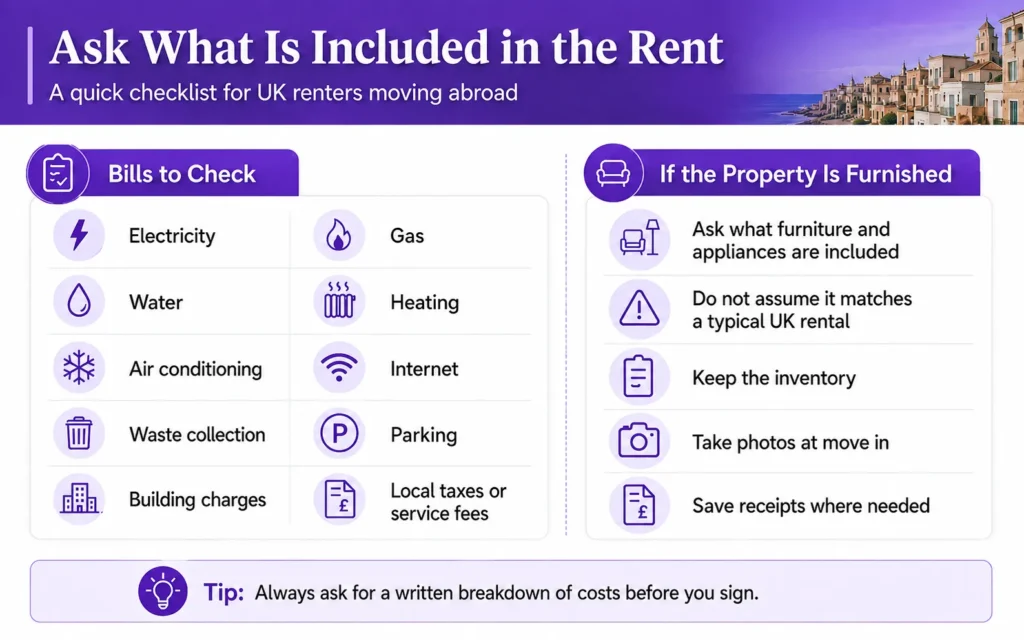
Ask What is Included in the Rent
Find out which bills sit outside the advertised price. Ask about electricity, gas, water, heating, air conditioning, internet, waste collection, parking, building charges and local taxes or service fees paid by the tenant.
If the property is furnished, ask what is provided. A listing marked furnished may not include the items you would expect in a UK rental. Keep copies of the inventory, photos and receipts where these are used locally.
Check the Deposit, Advance Rent and Guarantor Rules
A new arrival may not have a local credit file, local payslips or a resident guarantor.
Ask which proof of income and identity is accepted before paying anything. Find out where the deposit is kept, when it should be returned and what deductions local law allows. If several months of rent are requested in advance, make sure the payment terms are in the contract.
Verify the landlord or agent, the property address, and the contract before transferring a large sum. Pressure to send money quickly is a reason to slow down and check the details.
Read the Tenancy Agreement Before You Price the Move
A low monthly rent can become expensive if the contract is hard to leave.
Check the minimum term, notice period, renewal rules and any cost for ending the tenancy early. Ask when rent can be increased and what happens if you need to leave because your job, visa or family plans change.
The UK government advises checking the rules in your destination country and considering independent legal advice from an English-speaking lawyer there when the contract or local rules are unfamiliar.
Leave Room for Removals and Temporary Accommodation
Your housing fund also has to cover moving costs, flights and any short stay before you get the keys. Get removal quotes before deciding how much of your savings can go towards the deposit.
If you are still working out what it may cost to move your belongings overseas, visit https://threemovers.com/united-kingdom-international-moving-companies/ to review typical international moving costs and shipping timelines. Use the quote you receive in your own budget rather than relying on a broad estimate.
You may also need temporary accommodation while you view homes, sign papers or wait for the tenancy to start.
Check the Numbers Again Before You Sign
Before paying a deposit, confirm the full cost in local currency and in pounds. Check the rent, amount due at signing, bills, contract term, notice rules and payment method.
Then ask whether you could still cover the rent if your income fell or the exchange rate moved against you.
A sound rental budget is based on the real property, the real contract and the rules where you will live. The goal is to choose a home you can keep paying for after moving costs, bills, and the first few weeks abroad are accounted for.