How to Calculate Commercial Cleaning Costs for Your Office in London
Budgeting for a spotless workplace can feel confusing, particularly across this crowded capital. Quotes arrive in different formats, so comparing them takes effort. Offices vary hugely, from tiny studios to glass towers, so one-size answers rarely work. This guide shows a simple method for estimating monthly bills. Follow each step, and you will know what fair pricing looks like before phoning anyone.
How to Calculate Commercial Cleaning Costs for Office Spaces in London
Quick answer: To calculate commercial cleaning costs for an office, estimate how many cleaning hours each visit needs, multiply those hours by the number of visits per month and the hourly cleaning rate, then add any extra services, consumables and VAT if applicable. Office size, staff numbers, washrooms, kitchens, access arrangements and cleaning frequency can all affect the final price.
Start with the time needed for one visit, then work out how many visits take place in an average month. Once you have those figures, the basic labour cost is straightforward to estimate.
Monthly cleaning cost = hours per visit × visits per month × hourly rate + extras
The extras may include consumables, window cleaning, carpet cleaning, deep cleaning or other services outside the regular schedule. VAT should also be checked separately on the quote.
Worked Office Cleaning Cost Example
| Cost factor | Example | Calculation |
| Office size | 300 m² | Cleaned each weekday |
| Estimated time per visit | About 1.2 hours | Based on the required workload |
| Monthly visits | About 21.7 visits | 5 visits × 4.33 weeks |
| Monthly cleaning hours | About 26 hours | 1.2 × 21.7 |
| Hourly rate | £18 | Quoted cleaner rate |
| Estimated monthly labour cost | About £470 | 26 × £18 = £468 |
This example estimates the regular labour cost only. Consumables, specialist cleaning, call-outs and VAT can change the final monthly total, so they should be checked when comparing quotes.
Why Office Cleaning Costs Are Higher in London
Wages drive most expenses. Many firms follow the Living Wage rate set for city workers, which beats legal minimums. Travel adds more, because staff face pricey tickets plus long commutes. Parking, congestion charges, and storage space for supplies also push bills upward.
Building rules play a part too. Cleaners often work evenings, so suppliers need flexible teams, and that flexibility costs extra. Strict access systems inside tall towers can slow progress.
Competition for good employees is fierce. Better pay keeps reliable people around, which helps you, since familiar faces learn layouts and habits quickly.
Expect roughly £15 to £25 per cleaner per hour. Smaller companies may charge slightly more, yet finish sooner. Ask suppliers to explain their rates openly.
How Often Does Your Office Need Cleaning?
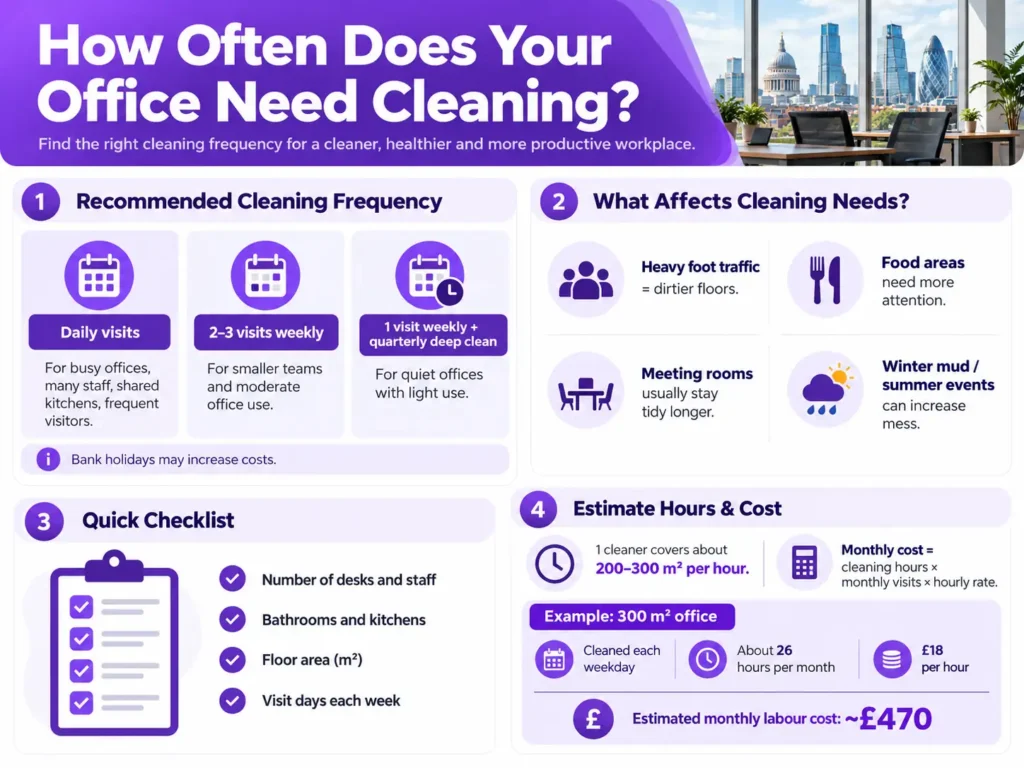
Frequency changes totals more than any other factor. Daily visits suit busy sites with many staff, shared kitchens, and visitors. Smaller teams may manage with two or three visits weekly. Quiet offices sometimes need only one session each week, plus a deep clean every quarter. Remember bank holidays, because some firms add surcharges on those dates.
Think about how people use the space. Heavy foot traffic means dirtier floors. Food areas need frequent attention, whereas meeting rooms stay tidy longer. Seasons matter as well. Winter brings mud and wet coats, while summer events bring extra rubbish.
Count your needs using this checklist:
- Number of desks and staff;
- Bathrooms, kitchens;
- Floor area in square metres;
- Visit days each week.
Then estimate hours. A rough guide says one cleaner covers around 200 to 300 square metres every hour. Multiply that time by monthly visits, then apply your quoted rate, giving totals. For example, a 300 square metre office cleaned each weekday needs about 26 hours monthly. At £18 an hour, that totals roughly £470.
What Is Included in Commercial Cleaning Prices?
Standard packages usually cover emptying bins, vacuuming, dusting, wiping desks, and cleaning toilets plus kitchens. Supplies such as soap and loo roll may cost extra. Some firms include products; others bill them separately. Bundled consumables keep invoices simple, whereas split pricing reveals true material costs. Neither approach is wrong; clarity matters most. Ask whether cleaners bring vacuums and mops or use yours. Confirm who covers sickness, since absences should never leave gaps.
Extras raise totals:
- Window washing;
- Carpet shampooing;
- Deep sanitising;
- Waste collection;
- Emergency call-outs.
Insurance, equipment, and training are normally built into pay rates. Always confirm whether VAT is shown, because many quotes list figures without it. Also check notice periods plus price rise clauses before agreeing. Regular office cleaning should be described clearly in writing, covering every duty.
How to Compare Commercial Cleaning Companies in London
Request at least three written quotes, using identical details so comparisons stay fair. Look beyond the lowest figure. Online reviews help, though references from real clients carry more weight. Visit a client site if possible, since seeing results beats reading brochures. Phone those contacts, asking about reliability, communication, and results.
Keep every quote in one spreadsheet, then score each company on price, scope, and trust. Cheap offers can hide rushed visits or untrained staff. Specialist commercial cleaning firms often understand tall buildings, security passes, and quiet-hours rules better than general providers.
Questions worth asking:
- Vetting methods for cleaners
- Insurance cover held
- References from nearby offices
- Supervision for each team
Contract length affects pricing. Longer terms often bring discounts, though flexibility has value when headcount changes. Arrange a trial month before signing anything long term. Good suppliers welcome feedback, then fix problems fast. A reliable cleaning service will answer plainly, without pressure.
Calculating costs becomes easier with a clear method. Measure the space, decide visit frequency, estimate hours, then compare written quotes. Doing so protects your budget and keeps standards high. Revisit this plan annually, since headcount, layouts, and wages all shift.
Frequently Asked Questions
How much does commercial office cleaning cost in London?
There is no single price for every office. Commercial cleaning prices in London vary with floor area, cleaning frequency, staff and visitor numbers, washrooms, kitchens, building access and the level of service required. The best comparison comes from giving each supplier the same cleaning specification and asking for a written quote.
How do I calculate monthly office cleaning costs?
Estimate the hours needed for each visit, multiply that figure by the number of visits in an average month, then multiply the result by the hourly rate. Add any separate charges for consumables, periodic cleaning, specialist work, and VAT where applicable.
What has the biggest effect on commercial cleaning costs?
Cleaning frequency is often one of the biggest cost drivers, but office size and how the space is used also matter. Busy kitchens, washrooms, high foot traffic, security procedures, and out-of-hours access can increase the time needed for each visit.
Are cleaning supplies and VAT included in the quote?
It depends on the supplier and the contract. Some companies include cleaning products and equipment in the regular rate, while consumables such as soap and toilet roll may be listed separately. Always check whether the quoted total includes VAT before comparing prices.