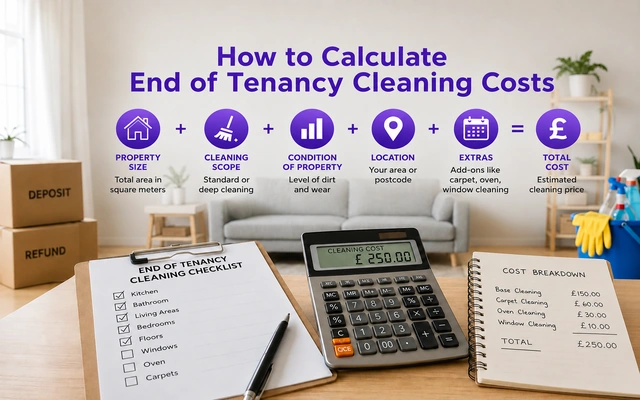
How to Calculate End of Tenancy Cleaning Costs
Moving out brings a long list of tasks. One item often causes confusion: cleaning costs. Renters want their deposit back, while landlords hope for a spotless property. Understanding these expenses helps both sides avoid disputes.
Prices vary widely depending on location, property type, and service provider. This guide breaks down what shapes the end of tenancy cleaning prices, so you can plan a realistic budget before moving day arrives. By the end, you’ll know exactly what to expect on your final invoice, and why quotes differ so much between companies. A little research now spares you unwanted stress later.
What Is the End of Tenancy Cleaning?
This service means a deep clean performed after a tenant moves out. Unlike routine tidying, it covers every corner: ovens, carpets, windows, and skirting boards. Landlords often require proof of professional cleaning before returning a deposit.
Many tenancy agreements even specify this requirement in writing. Some contracts name specific companies or standards tenants must meet. Skipping it can lead to deductions or disputes with your landlord. Knowing what’s expected upfront saves both time and money later, and it keeps the handover process friendly rather than tense. Reading your contract early avoids any last-minute surprises.
Factors That Affect the Final Cleaning Price
Several elements influence how much you’ll pay for a thorough clean. No two properties cost exactly the same amount, even inside one building. Below are the main ones worth considering:
- Property condition: heavily soiled homes need extra time and products;
- Number of rooms: larger properties naturally cost more;
- Extra services: carpet shampooing, oven detailing, or window washing add fees;
- Location: prices differ between cities and rural areas;
- Timing: last-minute bookings sometimes carry premium rates.
Each factor shifts the quote up or down, so ask companies for a detailed breakdown before agreeing to anything. A clear written estimate protects both you and the provider from surprises later, especially once the invoice arrives. Asking questions upfront rarely costs anything but saves plenty of frustration.
How Property Size Affects Your Cleaning Bill
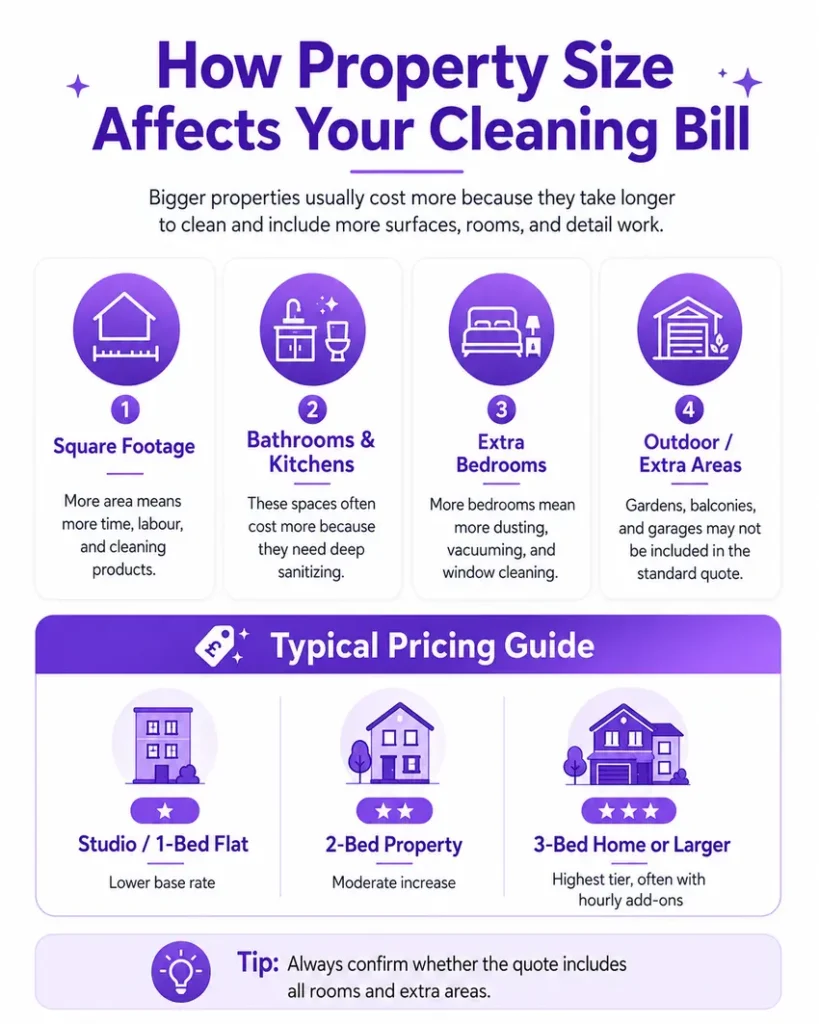
Square footage plays a major role in pricing. A studio flat typically costs less than a larger house, simply because fewer surfaces need attention. Bathrooms and kitchens usually carry higher rates since they require deep sanitizing. Extra bedrooms mean more dusting, vacuuming, and window work too. Gardens, balconies, and garages sometimes fall outside the standard quote entirely. Here’s a rough guide many companies follow:
- Studio or one-bed flat: lower base rate;
- Two-bed property: moderate increase;
- Three-bed home or larger: highest tier, often with hourly add-ons.
Always confirm whether quotes include all rooms or just the main living areas. Some providers charge separately for hallways, storage spaces, or balconies. Reading the fine print prevents unexpected charges on moving day, so never rush through a contract without questions. A quick phone call can clear up any confusion before you commit.
Choosing Between a Commercial Cleaning Company and a Local Cleaner
Deciding who handles the job matters as much as the price itself. A commercial cleaning company usually brings trained staff, insurance, and guaranteed results. These businesses often serve offices and rental portfolios alike, giving them broad experience. Local independent cleaners might offer lower rates but lack the same accountability. Consider these points before choosing:
- Insurance coverage: commercial cleaning firms typically carry liability protection.
- Equipment quality: larger companies often use industrial-grade tools.
- Availability: independent cleaners may have limited scheduling options.
- Guarantees: many businesses offer a re-clean if landlords aren’t satisfied.
For higher-value properties, hiring an established commercial cleaning provider reduces risk. Smaller flats might suit a trusted local cleaner just fine. Either option can work well, provided you check reviews and ask for references first, and confirm what happens if something gets missed. Trust counts for just as heavily as cost when strangers enter your home.
Calculating cleaning costs doesn’t need to feel overwhelming once you understand the variables involved. Property size, condition, and service type all shape your final bill. Comparing quotes from a few providers gives you leverage and clarity. Always ask what’s included, since hidden extras can inflate a seemingly low quote. Planning ahead also gives you room to negotiate a fairer rate.
If you’re searching for reliable, professional cleaning near your new home, Busy Bee Clean offers experienced teams ready to handle every detail of your move-out job. Their staff understand landlord expectations and work hard to protect your deposit. Booking early often means better availability and calmer moving days. Visitbusybeeclean.co.uk to get a free quote and secure your deposit with confidence.