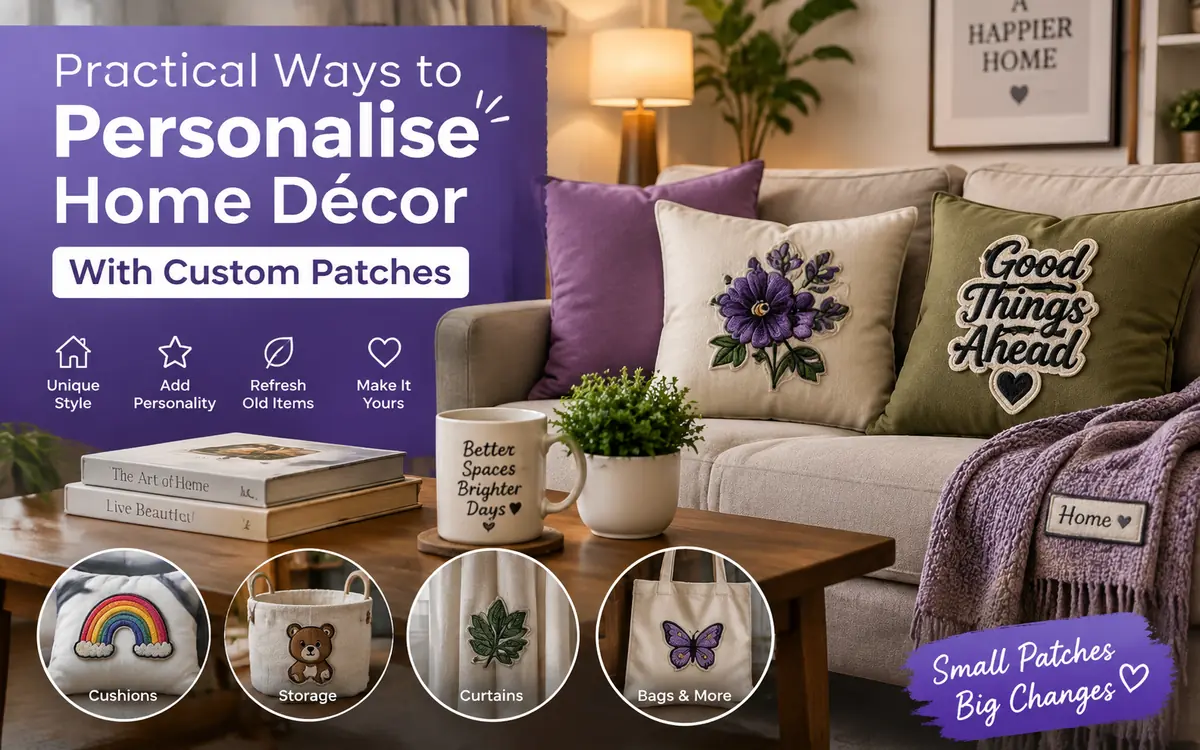
Practical Ways to Personalise Home Décor With Custom Patches
Personalising home décor does not always require buying new furniture, replacing accessories, or making major changes. Small decorative details can give familiar items a more personal appearance.
Custom patches are a practical option for updating fabric-based home items such as cushions, blankets, curtains, storage baskets, fabric organisers, and decorative textile pieces. They can add colour, texture, and character while allowing homeowners to reflect their interests, memories, and design preferences.
Whether you want to refresh an old cushion cover, organise a child’s room, or add personality to a hobby space, choosing the right patch style, placement, and attachment method can help create a balanced result.
Choose the Right Patch Style for Your Home Décor
Different patch styles create different visual effects. The best option depends on the fabric, design details, and how the finished item will be used.
| Patch Type | Best For | Appearance | Suitable Items |
| Embroidered Patch | Textured and classic designs | Raised stitched surface | Cushions, blankets, fabric panels |
| Woven Patch | Detailed lettering and small graphics | Smooth finish | Storage bags, organisers, decorative items |
| Printed Patch | Complex artwork and colourful designs | Flat printed surface | Wall textiles, cushions, creative projects |
| Flock Patch | Soft decorative texture | Velvet-like raised surface | Cushions and fabric accessories |
For a soft and distinctive texture, custom flock patches can be considered for suitable fabric décor. Their raised surface can add another tactile element to cushions, storage items, and other decorative pieces.
When selecting a patch, consider:
• The existing colour scheme of the room
• The weight and texture of the fabric
• The size of the design
• How often the item will be washed or handled
• Whether the patch will be sewn or attached with heat
The goal is to make the patch look like part of the décor rather than an unrelated addition.
Start With the Right Home Décor Item
The fabric and construction of the item should guide your patch choice. Strong materials such as cotton, canvas, and denim generally provide stable surfaces for decorative patches. Lightweight fabrics need more care because heavier patches may affect their shape.
Before applying a patch, inspect the item for loose stitching, fraying, stains, or damaged areas. Clean the fabric according to its care instructions and allow it to dry completely.
Plain fabric items often provide the best background. A simple cushion cover may support a larger design, while patterned curtains may work better with smaller, carefully positioned patches.
Refresh Cushions and Soft Furnishings
Cushions are among the easiest home décor items to personalise. Plain covers can be updated with initials, geometric patterns, flowers, symbols, or custom artwork.
Instead of replacing cushions when a room starts to feel repetitive, consider updating existing covers. Neutral cushions can work well with colourful patches, while bright cushions may suit simpler designs.
Patches can also cover small cosmetic imperfections such as faded areas or minor marks. A carefully placed patch can turn a small flaw into part of the design.
Personalise Fabric Storage and Organisers
Storage baskets, laundry bags, hanging pockets, and fabric organisers are useful places for custom patches because they often have simple designs.
Different patches can identify storage areas for children’s toys, books, craft supplies, or seasonal items. Initials and symbols can improve organisation while adding decoration.
Quick Ideas for Using Custom Patches in Home Décor
- Add family initials to cushion covers.
- Create a travel memory blanket using destination patches.
- Label storage baskets with decorative symbols.
- Decorate craft room organisers with hobby-related designs.
- Add book-inspired patches to a reading corner cushion.
- Personalise handmade gifts such as blankets or tote bags.
- Refresh older fabric items instead of replacing them.
- Create matching designs across different textile pieces.
Plan the Placement Before Attaching
Before attaching a patch, test different positions first. Place the patch on the fabric and view the item from a normal distance.
Consider seams, corners, folds, and existing patterns because they can affect the final design.
Select the Right Attachment Method
The attachment method depends on the fabric, patch type, and how frequently the item will be used.
Iron-on patches can work well on suitable heat-resistant fabrics. Sewn patches are often a better choice for items that require frequent washing.
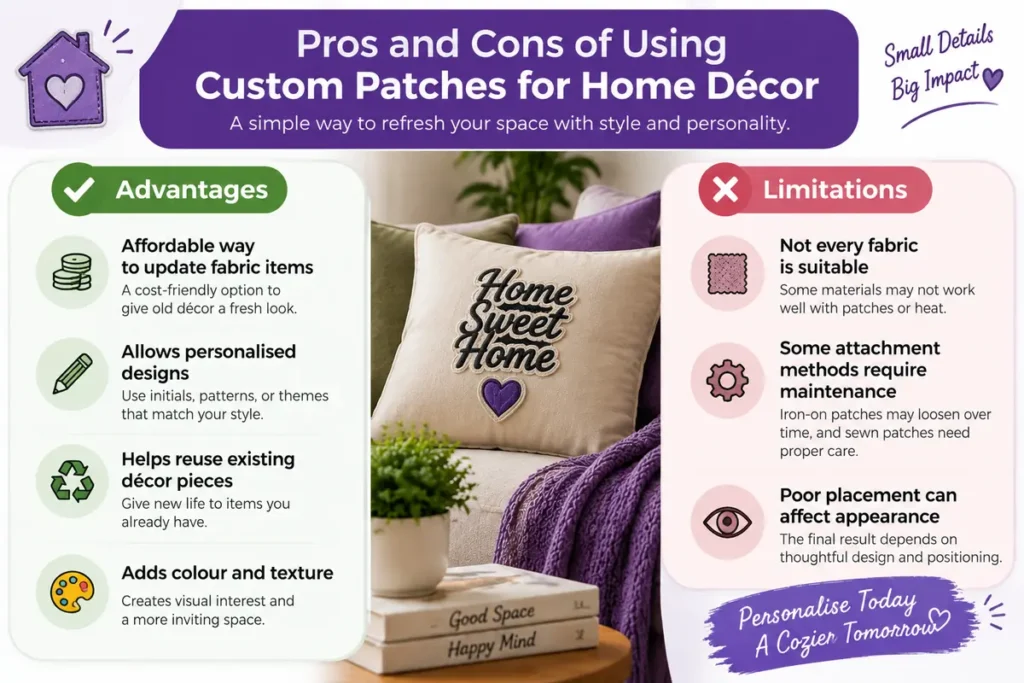
Pros and Cons of Using Custom Patches for Home Décor
Advantages:
- Affordable way to update fabric items
- Allows personalised designs
- Helps reuse existing décor pieces
- Adds colour and texture
Limitations:
- Not every fabric is suitable
- Some attachment methods require maintenance
- Poor placement can affect appearance
Frequently Asked Questions
Can custom patches be used on home décor items?
Yes. Custom patches can be applied to many fabric-based décor items, including cushions, blankets, storage bags, and decorative textiles.
Are sewn patches better than iron-on patches?
Sewn patches are usually more secure for items washed regularly, while iron-on patches can work well for suitable fabrics.
What fabrics work best with custom patches?
Cotton, denim, canvas, and similar strong fabrics generally provide stable surfaces.
Can patches cover damaged fabric?
Yes. Small stains or faded sections can sometimes be covered with a suitable patch.
Conclusion
Custom patches provide a simple way to personalise home décor without replacing existing items. They can refresh cushions, storage accessories, blankets, and other fabric pieces while adding a personal touch. The best results come from selecting the right patch style, matching the design with the room, and planning placement carefully.