Budgeting for a Market Stall or Pop-Up Shop
Starting a market stall or pop-up shop can be a practical way to test a product idea, meet customers face-to-face, and build awareness without committing to a permanent retail location. However, many first-time sellers underestimate the real cost of running a temporary retail space.
The stall fee is only one part of the budget. Equipment, stock, transport, packaging, payment fees, insurance, and staffing can quickly affect your profit margin. A busy event does not always mean a profitable event if the costs are not planned properly.
Before booking a space, create a realistic budget that covers every expected expense. This allows you to estimate how much you need to sell, compare different events, and decide whether the opportunity is worth your time and investment.
Market Stall Budget Breakdown
Before committing to an event, list every possible expense. The exact costs will depend on your location, product type, and event size, but the table below gives a useful starting point.
| Expense Category | Estimated Cost Range | What to Consider |
|---|---|---|
| Stall or space fee | £50 – £500+ | Depends on event popularity, location, and duration |
| Display equipment | £100 – £1,000+ | Tables, shelving, lighting, storage, and reusable displays |
| Inventory | Varies | Stock quantity, product costs, and backup items |
| Transport | £20 – £200+ | Fuel, parking, delivery, vehicle rental, or public transport |
| Payment processing | Percentage of sales | Card reader fees, transaction charges, and hardware costs |
| Packaging | £0.20 – £5+ per order | Bags, boxes, labels, and protective materials |
| Staffing | Depends on hours worked | Wages, breaks, setup help, and event support |
| Insurance and permits | Varies | Business requirements, licenses, and safety documentation |
| Contingency budget | 5% – 10% of total costs | Unexpected expenses during the event |
Use this as a planning guide rather than a fixed price list. Costs can vary significantly depending on the market, city, product category, and event organizer.
Start With the Stall or Space Fee
The first cost most sellers consider is the rental fee.
Market organizers may charge by the day, weekend, week, or event. Some pop-up spaces may also include additional charges such as deposits, electricity fees, cleaning costs, storage fees, or a percentage of sales.
Do not compare venues based only on the advertised stall price.
A higher-priced space may include useful services such as:
- Tables and furniture
- Electricity access
- Security
- Storage facilities
- Marketing support
- Better customer traffic
Calculate the full occupancy cost before deciding whether a venue offers good value.
Budget for the Physical Setup
Your display should make it easy for customers to understand what you sell and browse your products comfortably.
At minimum, many sellers need:
- Tables
- Shelving units
- Product stands
- Storage containers
- Lighting
- Price displays
- Branded signs
A professional-looking setup can improve customer trust. For example, custom table covers can turn a simple folding table into a branded display while allowing you to maintain a consistent appearance across different markets.
Choose equipment that can be reused. A display system that works across multiple events usually provides better value than a highly customized setup designed for only one location.
Work Out Your Inventory Budget
Inventory is often one of the largest expenses for sellers.
One common mistake is bringing too much stock. Excess inventory locks away cash and creates additional storage and transport challenges.
Estimate your stock requirements by considering:
- Expected visitor numbers
- Average order value
- Product popularity
- Previous sales data
- Event duration
Track Inventory by Category
- Best-selling products
- Low-cost impulse items
- Premium products
- Seasonal items
- Display samples
- Backup stock
If you are testing a new product range, start with smaller quantities. Use the event to understand customer demand before investing heavily in additional stock.
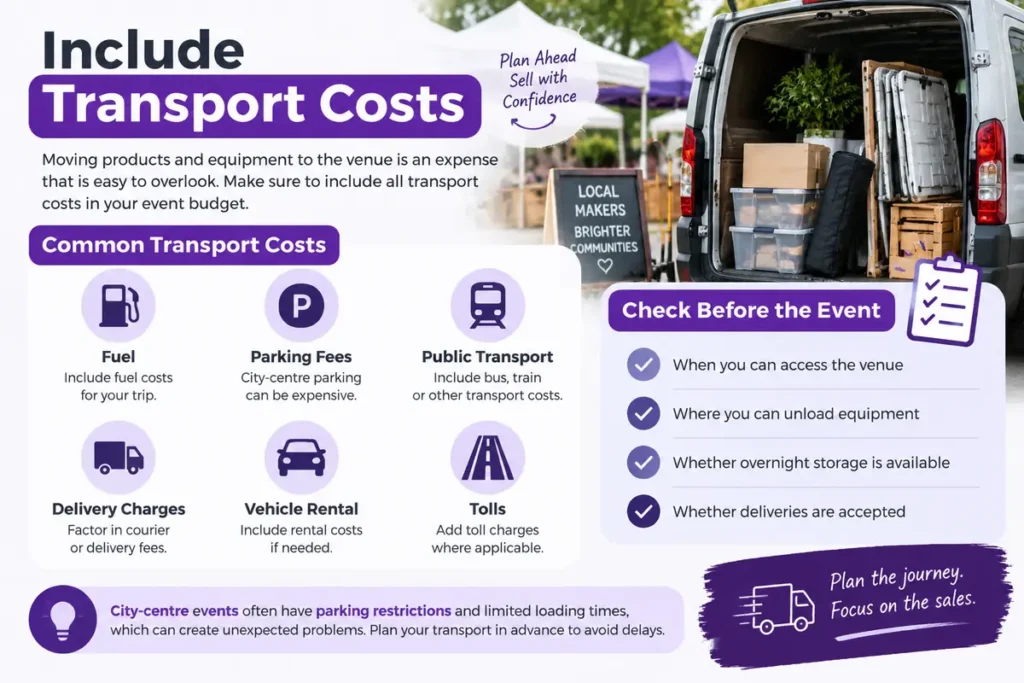
Include Transport Costs
Moving products and equipment to the venue is an expense that is easy to overlook.
Your transport budget should include:
- Fuel
- Parking fees
- Public transport costs
- Delivery charges
- Vehicle rental
- Tolls where applicable
For city-center events, parking restrictions and loading times can create unexpected problems.
Check:
- When you can access the venue
- Where you can unload equipment
- Whether overnight storage is available
- Whether deliveries are accepted
Transport is part of the event cost and should be included from the beginning.
Plan for Payment Processing Fees
Most customers expect convenient payment options, especially at busy markets and pop-up events.
Payment providers may charge:
- Transaction fees
- Monthly subscriptions
- Card reader costs
- Hardware charges
- Different rates depending on payment type
Estimate these costs based on expected sales.
For example, if you generate £2,000 in card sales, even a small processing percentage will reduce your final profit.
Before the event:
- Test your card reader
- Check internet connection
- Carry a backup payment option if possible
Technical problems during busy periods can lead to missed sales.
Add Staffing Costs
A small stall can often be managed by one person, but larger events may require additional help.
Consider the workload involved:
- Setting up equipment
- Serving customers
- Processing payments
- Answering questions
- Restocking products
- Managing queues
- Packing everything away
Consider Staffing For:
- Busy opening periods
- Lunch breaks
- Product demonstrations
- Stock movement
- Customer support
- Event breakdown
Many sellers underestimate how difficult it can be to manage every task alone during a busy market.
Budget for Signage and Pricing
Customers should understand your products quickly.
Clear signage helps visitors answer basic questions without waiting for assistance.
You may need:
- Main brand signage
- Product labels
- Price cards
- Promotional signs
- Menu boards
Avoid printing large quantities of signs with prices that may change frequently.
Reusable boards, replaceable inserts, and adjustable displays give you more flexibility for future events.
Keep signs simple, readable, and visible from a short distance.
Include Packaging Costs
Packaging is part of every transaction and should be included in your calculations.
Common packaging expenses include:
- Bags
- Boxes
- Tissue paper
- Labels
- Receipts
- Protective wrapping
Small costs can become significant over many sales.
For example:
A packaging cost of £1 per order becomes £200 after 200 sales.
Choose packaging based on your product requirements. Fragile or premium items may need stronger protection, while simple products may only require basic recyclable packaging.
Account for Insurance and Event Requirements
Some markets and pop-up venues require sellers to have appropriate insurance coverage.
For example, some businesses may need liability insurance depending on their products and activities.
Additional requirements may apply for:
- Food products
- Cosmetics
- Electrical items
- Demonstrations
- Children’s products
You may also need:
- Permits
- Licenses
- Safety documents
- Product compliance information
Check requirements before paying a non-refundable stall fee. Missing documentation can create unnecessary problems on the event day.
Hidden Costs Many Sellers Forget
Many sellers plan for obvious expenses but miss smaller costs that affect profitability.
Common hidden costs include:
- Extra parking time
- Replacement batteries or chargers
- Weather protection equipment
- Cleaning supplies
- Damaged stock
- Additional packaging
- Last-minute transport changes
- Event cancellation charges
- Storage boxes
- Promotional materials
These expenses may seem minor individually, but several unexpected costs together can reduce your final profit.
Adding a contingency budget helps protect your main investment.
Calculate Your Break-Even Point
A break-even calculation shows how much you need to sell before making a profit.
Example event costs:
| Expense | Amount |
|---|---|
| Stall fee | £250 |
| Display and signage allocation | £100 |
| Transport | £60 |
| Staffing | £150 |
| Payment and packaging costs | £40 |
| Other expenses | £50 |
| Total Event Costs | £650 |
If your average gross profit per sale is £20, you need approximately:
£650 ÷ £20 = 33 sales
This means you need around 33 profitable transactions just to cover your event costs.
This calculation makes it easier to compare different markets and decide which events are financially realistic.
Build in a Contingency Budget
Temporary retail events can change quickly.
Possible problems include:
- Poor weather
- Lower customer numbers
- Equipment issues
- Extra stock requirements
- Unexpected travel costs
Setting aside around 5% to 10% of your total event budget can provide protection against these situations.
Keep this money separate from normal spending so it is available when needed.
Review the Event Afterward
Do not measure success only by total sales.
After each event, review:
- Total revenue
- Gross profit
- Average order value
- Best-selling products
- Unsold inventory
- Customer contacts collected
- Total event expenses
A lower-sales event may still be valuable if it creates repeat customers or strong local awareness.
Use the results to improve your next event decision.
Frequently Asked Questions
How much does it cost to start a market stall?
The cost depends on your product type, location, and event size. A basic setup may require a few hundred pounds, while larger stalls with professional displays, more inventory, and staff can require a much larger budget.
What are the biggest expenses for a pop-up shop?
The highest costs are usually the stall fee, inventory, display equipment, transport, and staffing. The biggest expense will vary depending on the type of business.
How do I know if a market stall will be profitable?
Calculate all event costs first, then compare them with your expected sales and profit per transaction. A break-even calculation helps you understand how many sales are needed before earning profit.
Should I spend more on stall decoration?
Focus on function before appearance. A clear layout, good lighting, readable pricing, and organized products are usually more valuable than expensive decoration. Reusable branding materials can be a better investment than one-time designs.
Treat Every Pop-Up Like a Small Business Unit
A market stall or pop-up shop should be planned like a temporary business operation rather than a one-day selling opportunity.
Start by calculating the full cost of the space, then include inventory, equipment, transport, payments, packaging, staffing, insurance, and unexpected expenses.
The goal is not only to make sales during the event. The goal is to understand whether those sales create enough profit to justify the investment of money, time, and effort.
With accurate budgeting, reusable equipment, and regular performance reviews, each event becomes easier to evaluate and improve. A well-planned pop-up can become more than a sales day; it can become a useful way to test products, build customer relationships, and grow a small business.