What Makes a Rental Property Worth the Monthly Rent
A rental property is not good value simply because the monthly rent fits your budget. Two homes at the same price can have very different running costs, maintenance standards, storage options, energy efficiency, noise levels, and overall comfort.
The better approach is to compare the total cost of living in the property with what you actually receive in return. Location matters, but so do building condition, ventilation, heating, appliances, security, and how well the landlord or property manager maintains the home.
A property with slightly higher rent may provide better value if it reduces energy bills, saves commuting time, offers better comfort, or avoids frequent maintenance problems.
Compare Rent With the Total Monthly Cost
Start with the advertised rent, then estimate everything else you will regularly pay.
Utilities can make a supposedly affordable property considerably more expensive. Heating an inefficient older home may cost more than heating a smaller, better-insulated property with slightly higher rent.
Include recurring expenses such as:
- Electricity and gas
- Water where applicable
- Council Tax
- Internet
- Parking
- Transportation
- Service charges paid by the tenant
- Contents insurance
Compare properties using the total expected monthly cost rather than rent alone.
A simple rent comparison can be misleading because two properties with similar monthly rent may have very different real costs.
Check Heating, Ventilation, and Air Quality
Indoor comfort affects how much value you actually receive from the property.
Look at how the home is heated and ventilated. Check whether bedrooms have usable windows, whether bathrooms have effective extraction, and whether condensation is visible around windows or walls.
In larger residential developments, converted commercial buildings, or mixed-use properties, building managers may also use more advanced ventilation or air filtration systems to manage airborne particles in shared or heavily occupied spaces.
A viewing cannot tell you everything about indoor air quality, so ask how ventilation works and whether major building systems are regularly maintained.
Musty smells, persistent condensation, visible mold, and poorly ventilated interior rooms deserve further investigation before signing a tenancy.
Look at Energy Efficiency
Energy performance directly affects running costs.
Inspect windows and exterior doors for obvious drafts. Check whether glazing appears modern and whether heating controls allow individual rooms or zones to be managed effectively.
Ask what type of heating system the property uses.
Older electric resistance heating can have different operating costs from a modern heat pump or efficient central heating system.
If previous utility information is available, use it as a reference rather than estimating only from property size.
A larger efficient home can sometimes cost less to run than a smaller poorly insulated one.
Judge the Condition, Not the Decor
Fresh paint can make a property look well maintained even when important systems need attention.
Look past decorative finishes.
Check:
- Doors
- Windows
- Flooring
- Plumbing fixtures
- Electrical outlets
- Kitchen appliances
- Shower seals
- Signs of previous water damage
Pay Particular Attention To
- Leaking faucets
- Damaged flooring
- Loose electrical fixtures
- Cracked window seals
- Water stains
- Poor drainage
- Broken locks
- Faulty appliances
Minor cosmetic defects may not matter.
Repeated signs of deferred maintenance matter much more because they can indicate how future repair requests are likely to be handled.
Calculate the Value of the Location
A higher rent may be reasonable if the property saves money elsewhere.
Living near work, public transportation, schools, grocery stores, or services can reduce transportation costs and commuting time.
Do the actual calculation
For example, if one property costs £100 more per month but eliminates £150 of transportation expenses, the more expensive rental may create better overall value.
Time also has value
A 15-minute commute and a 60-minute commute can produce very different daily experiences even when the homes themselves are similar.
Measure the Usable Space
Advertised size does not always tell you how practical a home will be.
Room shape, storage, ceiling height, door placement, and circulation can make two properties with similar floor areas feel completely different.
Bring measurements for important furniture.
Check whether beds, desks, sofas, and dining furniture will fit without blocking normal movement.
Built-in storage can also reduce the need to buy wardrobes, cabinets, or external storage.
A smaller home with an efficient layout may provide more usable space than a larger property with awkward rooms.
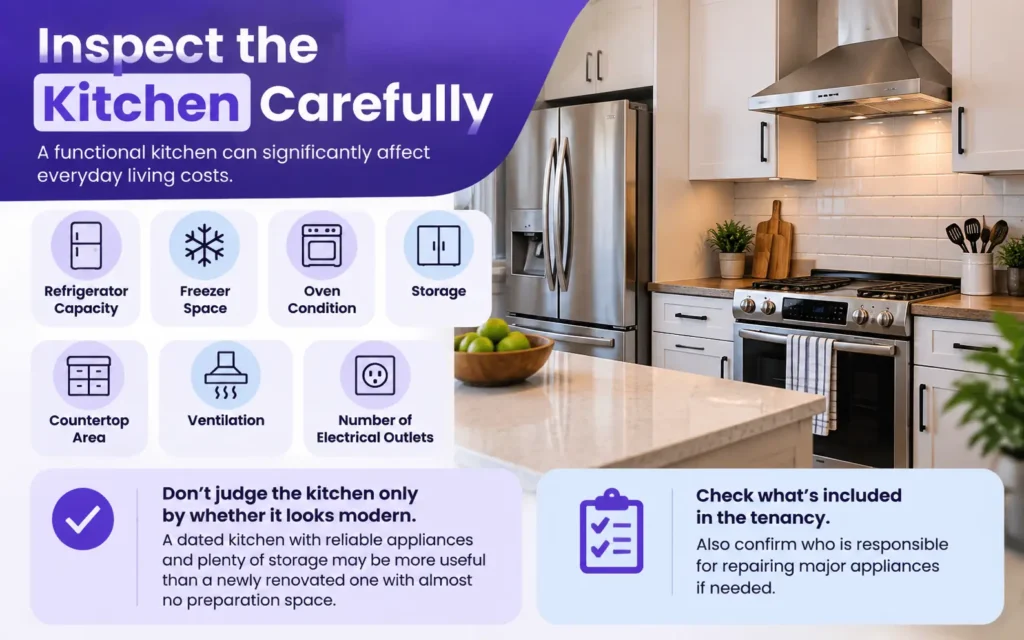
Inspect the Kitchen Carefully
A functional kitchen can significantly affect everyday living costs.
Check:
- Refrigerator capacity
- Freezer space
- Oven condition
- Storage
- Countertop area
- Ventilation
- Number of electrical outlets
Do not judge the kitchen only by whether it looks modern.
A dated kitchen with reliable appliances and plenty of storage may be more useful than a newly renovated one with almost no preparation space.
Also check whether major appliances are included in the tenancy and who is responsible for repairing them.
Evaluate Noise at the Right Time
Noise is difficult to judge during a short daytime viewing.
Traffic, neighboring apartments, nearby restaurants, trains, nightlife, and building equipment may become much more noticeable during evenings or weekends.
If possible, visit the area at another time.
Listen for noise in bedrooms as well as living areas.
In apartment buildings, ask about wall and floor construction if sound transmission is a concern.
A lower rent may not compensate for a property where regular noise interferes with sleep or work.
Check Security and Access
Security features contribute to rental value even though they are rarely highlighted in photographs.
Inspect:
- Exterior doors
- Window locks
- Shared entrances
- Lighting
- Gates
- Access-control systems
For apartments, check how visitors enter the building and whether parcel deliveries can be handled securely.
Bike storage and parking security may also matter depending on your transportation needs.
Good access should be secure without becoming inconvenient for everyday use.
Review Maintenance Responsiveness
A well-maintained property can be worth more than a cheaper home where every repair becomes difficult.
Ask:
- How maintenance requests are submitted
- Who handles emergencies
- How quickly repairs are usually completed
Look at shared areas.
Hallways, elevators, gardens, waste areas, and building entrances can reveal how actively the property is managed.
If common spaces are consistently neglected, consider whether the same approach could affect repairs inside the rental.
Consider What Is Included
The monthly rent may cover more than the property itself.
Some rentals include:
- Parking
- Furniture
- Internet
- Certain utilities
- Landscaping
- Gym access
- Storage
- Other amenities
Put a Realistic Value on Extras
Ask whether you would actually pay separately for each feature.
A gym has little financial value if you never use it. A secure parking space may be extremely valuable if alternatives nearby are expensive.
Avoid choosing a property simply because it has the longest list of amenities.
Useful amenities matter more than numerous ones.
Compare Rent With Your Remaining Budget
The final question is not whether you can technically qualify for the property.
It is whether the monthly cost leaves enough money for everything else.
After rent and housing expenses, your budget still needs to cover:
- Food
- Transportation
- Debt payments
- Savings
- Emergencies
- Normal discretionary spending
A property can be attractive and fairly priced while still being too expensive for your personal budget.
Set your comfortable housing limit before viewing properties so an impressive home does not push you into a payment that becomes difficult to maintain.
Compare Rental Properties by Total Monthly Value
Looking only at rent can create the wrong impression. A property with higher rent may have lower overall costs because of better efficiency, location, or included services.
Example comparison:
| Cost Factor | Property A | Property B |
|---|---|---|
| Monthly Rent | £900 | £1,000 |
| Energy Bills | £180 | £90 |
| Transport Cost | £150 | £50 |
| Parking | £0 | £75 |
| Internet | £30 | £30 |
| Total Monthly Cost | £1,260 | £1,245 |
In this example, Property B has a higher monthly rent but a lower overall cost because reduced energy and transportation expenses offset the difference.
This is why rental value should be judged by the complete monthly picture rather than the advertised rent alone.
Rental Property Red Flags That Can Reduce Value
A property may look attractive during a short viewing, but certain warning signs can indicate higher costs, lower comfort, or future maintenance problems.
Look carefully for:
- Persistent damp or musty smells
- Visible mold or repeated condensation problems
- Old heating systems with poor controls
- Damaged windows or noticeable drafts
- Water stains on ceilings or walls
- Broken appliances that appear poorly maintained
- Poor lighting around entrances
- Unsafe access areas
- Neglected shared spaces
- Slow or unclear maintenance processes
A low monthly rent may not represent good value if these issues create additional expenses or reduce your quality of living.
Judge Value Based on the Whole Property
A worthwhile rental combines affordable monthly costs with practical space, reliable building systems, good maintenance, and a location that supports your routine.
Do not compare properties using rent alone.
Estimate total housing expenses, inspect the physical condition, evaluate energy use, check ventilation and noise, and consider the value of included features.
The right rental is the one that provides a strong balance between cost, comfort, reliability, and your everyday needs.
Frequently Asked Questions
What makes a rental property worth the monthly rent?
A rental property is worth the monthly rent when the total cost, location, condition, comfort, and included features provide reasonable value compared with similar properties. A cheaper rental is not always the most affordable option if it has higher energy bills, transport costs, or maintenance issues.
Should I choose the cheapest rental property available?
Not always. A lower rent may come with higher ongoing costs, poor insulation, limited storage, longer commuting times, or maintenance problems. A slightly more expensive property may provide better overall value.
How can I compare two rental properties?
Compare more than the advertised rent. Review total monthly expenses, heating costs, transportation, storage, condition, security, noise levels, and included amenities before making a decision.
What should I check before signing a rental agreement?
Before signing, inspect heating systems, ventilation, windows, appliances, security features, maintenance history, and signs of damp or damage. Also confirm which costs are included in the rent and who is responsible for repairs.
Final Thoughts: Look Beyond the Monthly Rent
Finding a rental property with good value requires more than choosing the lowest monthly price.
A home that appears affordable at first may become expensive because of high energy bills, transportation costs, poor maintenance, or limited comfort. On the other hand, a property with slightly higher rent may provide better long-term value through efficiency, convenience, and reliability.
Before committing to a tenancy, compare the complete cost of living in the property. Consider how well it fits your budget, lifestyle, and daily routine.
The best rental choice is not simply the cheapest home available. It is the property that offers the right combination of affordability, comfort, location, and dependable living conditions for the time you plan to stay.