How to Work Out What You Can Really Afford When Renting a Shared House
When you are looking for a shared house, it is easy to focus on the advertised weekly or monthly rent. But that figure is only part of the picture.
The real cost of renting with friends can include bills, deposits, transport, food and other household expenses. Before agreeing to a property, it is worth taking the time to understand exactly what you will be responsible for and how those costs fit into your wider budget.
For students comparing shared houses in Lincoln, looking beyond the headline rent can make it much easier to compare different properties and understand what you will actually be paying throughout the tenancy.
Start With Your Own Share of the Rent
The first step is to work out your personal share rather than focusing only on the total rent for the property.
If each tenant pays an equal amount, the calculation is straightforward. For example, if the rent is listed at £130 per person per week, you can use that figure to estimate your own monthly and yearly housing costs.
However, not every shared house works this way.
One bedroom may be larger, have an en-suite bathroom or offer more privacy than the others. In some groups, tenants agree to pay different amounts to reflect these differences.
Before committing to a property, make sure everyone understands:
- How much each person will pay
- Whether the rent is quoted weekly or monthly
- When payments are due
- How long the tenancy lasts
- Whether your share could change during the agreement
Knowing your exact responsibility from the start can help prevent confusion later.
Check Exactly What Is Included
A lower rent does not always mean a lower overall cost.
Some properties include certain bills in the rent, while others require tenants to arrange and pay for everything separately. These costs can include:
- Gas
- Electricity
- Water
- Internet
- Contents insurance
- TV licence, where applicable
This is why it is important to compare the total expected cost, not just the advertised rent.
A property with a slightly higher weekly rent may be easier to budget for if key household bills are already included. It can also give you a clearer idea of what you are likely to spend each month.
When comparing properties, ask for a clear breakdown of what is and isn’t included before deciding.
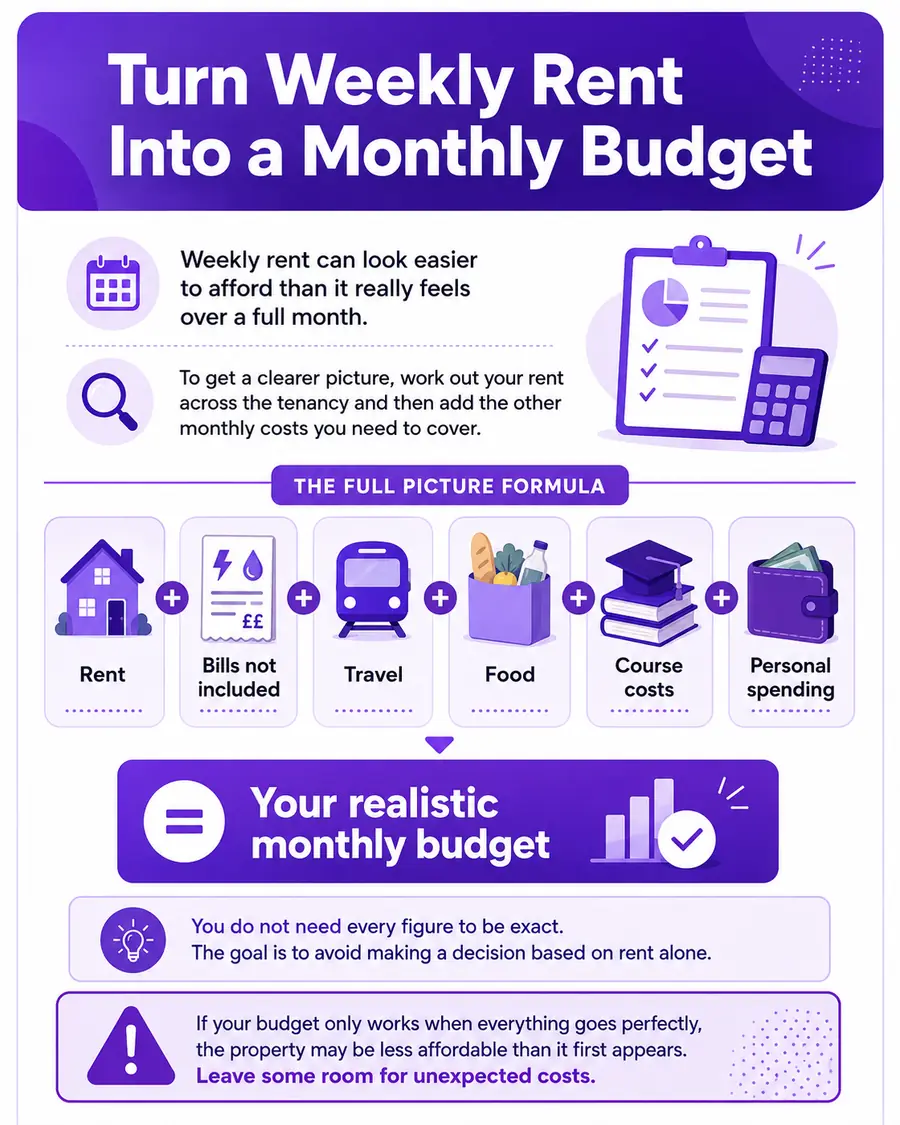
Turn Weekly Rent Into a Monthly Budget
Weekly rent can sometimes make a property appear easier to afford than it feels once you look at the cost over a full month.
To get a clearer picture, work out how much your rent will cost over the tenancy, then consider the other expenses you will have each month.
Your housing budget might look something like this:
Rent + bills not included + travel + food + course costs + personal spending = your realistic monthly budget
You do not need every figure to be exact. The purpose is to avoid making a decision based on rent alone.
If your budget only works when everything goes perfectly, the property may be less affordable than it first appears. Leaving some room for unexpected costs can make shared living much less stressful.
Think About the Cost of the Whole Year
Students often focus on what they can afford right now, but a tenancy can last for much longer than a few months.
Before signing, check:
- The tenancy start and end dates
- The total number of weeks you will be paying rent
- Whether you will still be paying during periods when you are away from the property
- Any upfront payments required before moving in
A property may seem affordable on a weekly basis but become a much larger commitment when you calculate the full cost of the contract.
Looking at the total amount you are agreeing to pay can also help you compare two properties more accurately.
Do Not Forget the Upfront Costs
Rent is not usually the only money you need before moving in.
Depending on the property and tenancy arrangement, you may need to budget for:
- A holding deposit
- A security deposit
- Your first rent payment
- Travel or moving costs
- Essential items for the house
These costs can arrive before you have settled into the property, so it is worth planning for them early.
Ask the letting agent or landlord for a clear explanation of what payments are required and when they are due. This can help you avoid last-minute pressure when the move-in date gets closer.
Consider the Size of Your Group
The number of people you live with can affect more than the social side of shared accommodation.
Larger houses may spread some costs across more people, while smaller houses may offer more privacy but leave fewer people contributing towards shared expenses.
There is no single group size that is right for everyone. Instead, consider what works for your budget and the way you want to live.
Think about:
- How many people you are comfortable sharing with
- The number of bathrooms
- The size of the kitchen and communal areas
- Whether everyone has similar expectations around spending and cleanliness
- How shared costs will be divided
A cheaper room is not always the best value if the property does not suit the needs of the group.
Talk About Money Before You Move In
Money can become one of the biggest sources of tension in a shared house when expectations are not discussed early.
Before signing a tenancy, have an honest conversation with the people you plan to live with.
It can be helpful to agree on:
- How shared costs will be divided
- Who will organise household bills if they are not included
- How you will handle unexpected costs
- What happens if someone struggles to make a payment
- Whether everyone is comfortable with the financial commitment
These conversations may feel awkward before you move in, but they are usually much easier than dealing with disagreements later.
A shared house works best when everyone understands their responsibilities from the beginning.
Remember That Location Can Affect Your Budget Too
The rent is only one part of the cost of where you live.
A cheaper property that is further away from university, work or other places you visit regularly may lead to higher transport costs. You may also spend more time travelling each week.
On the other hand, a property in a more convenient location may have a higher rent but reduce other regular expenses.
When comparing properties, think about the full cost of the location, including:
- Bus or train fares
- Fuel or parking
- The cost of travelling home regularly
- Access to shops and essential services
- How often you are likely to use paid transport
Affordability is not simply about finding the lowest rent. It is about understanding what the overall arrangement will cost you.
Leave Some Room in Your Budget
It is tempting to spend every pound you can afford on rent to secure a property you really like.
However, a more realistic approach is to leave some flexibility in your monthly budget.
Unexpected costs can arise during the year, and your financial circumstances may change. Having a small amount of room can make it easier to manage these situations without immediately falling behind on other expenses.
Before committing, ask yourself:
Would I still be comfortable paying for this property if I had an unexpected expense next month?
If the answer is no, it may be worth looking at a more affordable option.
Affordability Is About the Full Picture
Finding the right shared house is about more than dividing the rent between a group of friends.
The most useful calculation is the one that considers your full financial commitment. Look at your own share of the rent, check what bills are included, account for upfront costs and consider how the property will affect your spending over the entire tenancy.
Taking the time to do this before signing can help you make a more informed decision and avoid unpleasant surprises later.
The best shared house is not necessarily the one with the lowest advertised rent. It is the one that offers a living arrangement you can realistically afford while giving you a clear understanding of what you will be paying throughout the year.