
Why Autumn Is the Most Important Season in Your Facilities Management Calendar
Winter doesn’t arrive all at once. It creeps in.
The first heavy rain finds the blocked gutter. The first cold snap finds the heating plant that sat idle all summer. The first named storm finds the loose flashing everyone meant to look at in August.
For facilities managers across the South East, autumn is the window to get ahead of it. The Met Office storm naming season began in early September, and the jobs you plan now can be scheduled, budgeted and completed on your terms. The same jobs left until January are usually reactive, urgent and considerably more expensive.
A facility is easiest to manage before something goes wrong. Winter exposes the cost of reactive maintenance more than any other season. This checklist covers the systems most likely to fail during winter and the checks teams should complete before temperatures drop, system by system.
Why Autumn Is the Most Important Season in Your PPM Calendar
Most winter building failures aren’t sudden. They’re small defects that were already there, exposed by colder temperatures, heavier rainfall and higher wind loads.
A slightly sticky valve becomes a heating failure. A partially blocked outlet becomes a roof leak. A tired seal becomes water ingress into an electrical fitting.
Autumn is also when contractors are easiest to book. Once the first cold spell hits, heating engineers, roofers and drainage specialists are all in demand at the same time, and response times lengthen accordingly.
Moving winter readiness work into September and October is one of the simplest, most effective ways proactive FM saves your business time and money.
Where Winter Preparation Fits in Your Facilities Management Calendar
| Month | Key Activity |
|---|---|
| September | Heating checks, roof inspection |
| October | Drainage clearance, storm preparation |
| November | Frost protection, gritting setup |
| December | Shutdown planning |
Heating and Mechanical Systems: Test Before You Need Them
The worst time to discover a heating fault is the first Monday morning of a cold week, with a building full of people.
Under the Workplace (Health, Safety and Welfare) Regulations 1992, employers must maintain a reasonable temperature indoors. HSE’s Approved Code of Practice suggests a minimum of 16°C, or 13°C where work involves rigorous physical effort. If your heating fails, that isn’t just a comfort issue. It’s a compliance one.
Before the heating season starts:
- Service boilers and plant: Gas-fired equipment should be serviced by a Gas Safe registered engineer, with flue, ventilation and safety device checks completed.
- Run the system under load: Fire up heating ahead of demand to identify failed pumps, seized valves, airlocks and pressurisation faults while there’s still time to fix them.
- Review BMS schedules and setpoints: Occupancy patterns often change over the year. Heating a building to full temperature for hours when nobody is in it is wasted energy and wasted money.
- Check frost protection settings: Frost thermostats and frost modes on plant should be confirmed as working, particularly for buildings that are partially occupied or closed over holidays.
- Inspect air handling units: Replace filters, check heater batteries, and confirm dampers are operating correctly so fresh air isn’t being drawn in unheated.
Water Systems: Frozen Pipes and the Christmas Shutdown
Water systems face two very different winter risks: freezing and stagnation.
A burst pipe in a roof void or plant room can cause thousands of pounds of damage in a matter of hours, often discovered only when water comes through a ceiling. Exposed and vulnerable pipework should be insulated, trace heating tested, and stopcocks and isolation valves located, labelled, and confirmed as operable. If a leak happens at 2am, whoever responds needs to know exactly where to turn the water off.
The less obvious risk is Legionella. Many commercial buildings close or run at reduced occupancy over the Christmas and New Year period. When water sits unused, temperatures drift into the range where bacteria can multiply.
HSE’s technical guidance, HSG274, sets out the key controls:
- Hot water should be stored at 60°C or above.
- Hot water should reach at least 50°C at outlets within one minute.
- Cold water should be below 20°C within two minutes of running.
- Little-used outlets should be flushed for several minutes at least weekly.
Closures don’t pause those responsibilities. Plan who will carry out flushing during extended shutdowns, or schedule a thorough flush and temperature check before the building reopens. Avoid switching off hot water systems entirely without a clear recommissioning plan.
Electrical Systems: More Load, Less Daylight
Winter puts electrical systems under a different kind of pressure.
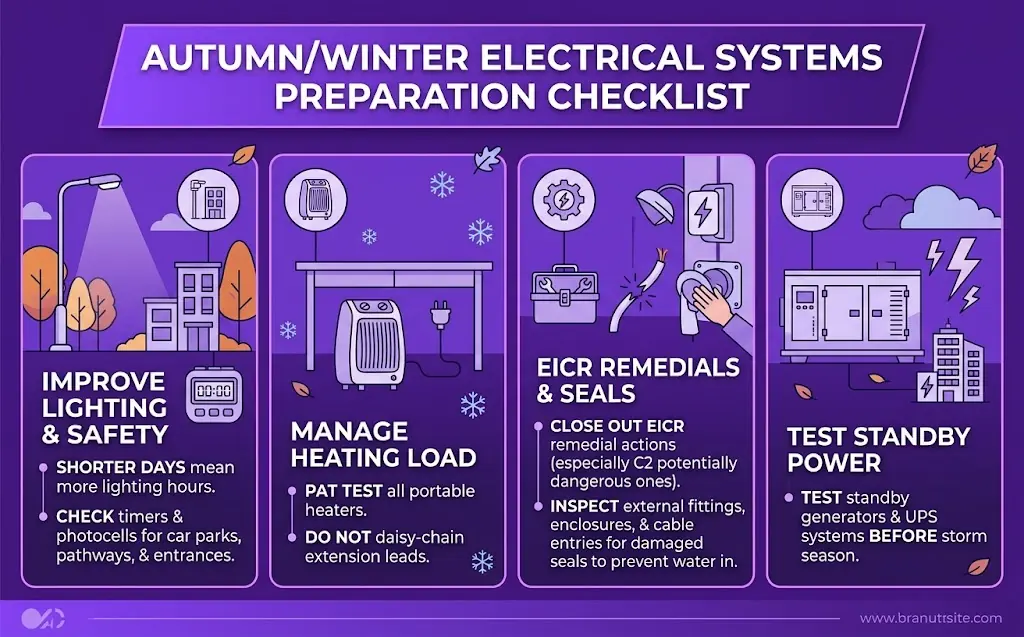
Shorter days mean lighting runs for longer, and external lighting on timers or photocells needs checking so car parks, pathways and entrances are properly lit when staff arrive and leave in the dark.
Colder offices also bring a familiar sight: portable heaters appearing under desks. Each one is an additional load, a potential ignition source and a piece of equipment that may not be on your testing register. Make sure any portable heaters in use are included in your PAT testing regime, and discourage daisy-chained extension leads.
Autumn is also a good time to:
- Close out any outstanding remedial actions from your last EICR, particularly C2 (potentially dangerous) observations.
- Inspect external electrical fittings, enclosures and cable entries for damaged seals that could allow water in.
- Test standby generators and UPS systems before storm season makes a power cut more likely.
Fire Safety and Emergency Lighting: Darker Days Expose the Gaps
Emergency lighting that nobody noticed was failing in June becomes critical in December, when an evacuation could easily take place in darkness.
BS 5266-1 requires monthly functional tests and an annual full rated duration test. If any of those have slipped over the summer, now is the time to catch up and replace failed batteries or fittings. The latest edition of the standard, published in 2025, also introduces periodic photometric verification to confirm light levels still meet the original design.
Other winter fire safety checks worth adding to the list:
- Fire doors. Damp weather can cause timber doors to swell, leaving them unable to close fully into their frames. A fire door that doesn’t close isn’t doing its job.
- External escape routes. Keep routes and final exits clear of leaves, ice, stored materials, and seasonal deliveries.
- Assembly points. Check your assembly point is adequately lit and safely accessible in the dark.
- Heater placement. Make sure portable heaters are kept away from combustible materials and aren’t obstructing escape routes.
Building Fabric: Roofs, Gutters and Drainage
Water is the enemy of every building, and winter delivers more of it.
Gutters, downpipes, roof outlets and surface water gullies should be cleared before the wet weather sets in, and again once the leaves have finished falling. A single clearance in September rarely does the job on sites with trees nearby.
Flat roofs deserve particular attention. Ponding water, blocked outlets and splits in the membrane all get worse with freeze-thaw cycles, and a small leak left over winter can damage insulation, ceilings and electrical services below.
Before storm season:
- Inspect roof coverings, flashings, ridge tiles and cladding fixings.
- Check window and door seals for gaps that will let in wind-driven rain.
- Confirm external signage, satellite dishes and roof-mounted equipment are securely fixed.
- Review overhanging trees that could drop limbs onto roofs, vehicles or pathways.
After any significant storm, a quick external inspection is far cheaper than discovering damage weeks later. For buildings near the sea, where wind and salt accelerate wear, those inspections should be more frequent still.
Grounds and Access: Slips, Trips and Gritting
Under the Occupiers’ Liability Act 1957, building occupiers owe a duty of care to visitors, and slips and trips remain one of the most common causes of workplace injury. Icy car parks and wet entrances are exactly where they happen.
A winter access plan doesn’t need to be complicated, but it should be written down:
- Who grits, when, and where. Prioritise main pedestrian routes, entrances, steps and ramps.
- Salt stocks. Buy before the first frost, not during it.
- Entrance matting. Make sure it’s large enough to deal with wet footwear and is kept flat and secure.
- Drainage. Clear areas where puddles form, as they will freeze overnight.
- Lighting. Ensure external routes are well lit, so hazards can be seen.
Plan for Disruption: Storms, Power Cuts and Shutdowns
Even the best-maintained building can be affected by severe weather. What matters is how quickly you can respond.
Make sure your emergency contact list is up to date, your reactive maintenance provider can respond out of hours, and key holders know where the isolation points for water, gas and electricity are.
If your building will be empty for any length of time over the holidays, arrange regular inspection visits. It’s also worth checking your insurance policy, as many include specific conditions for unoccupied premises, such as minimum inspection frequencies or requirements to drain down water systems.
Your Winter Readiness Checklist
- Heating plant serviced, tested under load, and BMS schedules reviewed
- Frost protection confirmed and vulnerable pipework insulated
- Stopcocks and isolation points located and labelled
- Legionella flushing plan in place for holiday closures
- Portable heaters PAT tested, and outstanding EICR remedials closed out
- External lighting, generators and UPS systems tested
- Emergency lighting tests up to date and fire doors closing correctly
- Gutters, roof outlets and drains cleared
- Roofs, flashings and external fixings inspected
- Gritting plan agreed and salt stocks in place
- Emergency contacts and out-of-hours arrangements confirmed