
Hidden Costs of Renting: Why You Should Budget for Cleaning Before You Move Out
Moving out of a rented property can involve more than the final rent payment and removal costs. You may also need to budget for cleaning supplies, specialist tasks or a professional cleaning service. The amount depends on the size and condition of the property, your location and the work included in a quote.
You do not automatically need to hire a professional cleaner. The important point is to understand the condition in which the property must be returned, allow enough time for the work and keep evidence of its condition. This guide explains how to plan your budget, compare cleaning quotes and prepare for checkout.
What Costs Should You Plan for When Moving Out?
Rent is only one part of the cost of moving home. Depending on your circumstances, your final budget may include:
- Final council tax, gas, electricity, water and broadband bills, where these are your responsibility.
- Removal vans, packing materials, temporary storage or replacement furniture.
- Cleaning products, cloths, vacuum bags or other supplies if you clean the property yourself.
- Optional professional cleaning, such as a detailed oven clean or carpet cleaning.
- Reasonable costs for damage you caused, where applicable; ordinary wear and tear is different from damage.
Not every tenant will have all these expenses. Review your tenancy agreement and final bills early, then separate known costs from optional services. In England, a landlord or agent cannot simply require a tenant to pay a professional-cleaning fee because the tenancy is ending. However, cleaning costs may be claimed from a deposit if the property is left less clean than it was at the start and the claim is properly supported by evidence.
How Much Does End-of-Tenancy Cleaning Cost?
There is no single price that applies to every UK property. A reliable estimate should reflect the work required rather than just the number of bedrooms. Before relying on a published price range, check that it is current, applies to your location and describes the same service you need.
The following factors can affect the quote:
| Price factor | What to check |
| Property size and layout | Confirm the number of bedrooms, bathrooms and other rooms included. |
| Current condition | Explain whether there is heavy grease, built-up limescale, stains or other areas needing extra work. |
| Oven and appliances | Ask whether the oven, hob, extractor, fridge and freezer are included in the base price. |
| Carpets and windows | Check whether carpet cleaning or window cleaning is included or quoted separately. |
| Location and access | Ask about travel, parking, access arrangements and any location-related charges. |
| Extras and terms | Confirm VAT where applicable, cancellation terms, payment timing and any re-clean policy. |
To compare providers fairly, request itemised written quotes based on the same checklist. A cheaper headline price may not include the same rooms or tasks as another quote. Do not assume that an advertised package covers every item in your inventory.
Do Tenants Have to Hire a Professional Cleaner?
In England, tenants generally cannot be required to pay for a professional clean simply because they are moving out, or to use a particular cleaning company. They are, however, expected to return the property in a condition consistent with how clean it was at the start of the tenancy, allowing for fair wear and tear. If additional cleaning is needed because the property has been left less clean than it was at check-in, a landlord may seek a reasonable, evidence-based deduction.
For details, read the GOV.UK guidance on the Tenant Fees Act and the Tenancy Deposit Scheme’s explanation of professional cleaning at the end of a tenancy. These legal points are specific to England; rules and procedures can differ in Scotland, Wales and Northern Ireland.
What Do Landlords and Letting Agents Usually Check?
A checkout inspection may compare the property’s condition with the check-in inventory, photographs and notes. The expected standard depends on the property’s condition at the beginning of the tenancy, so use your own inventory as a guide rather than assuming every property has to meet an identical checklist.
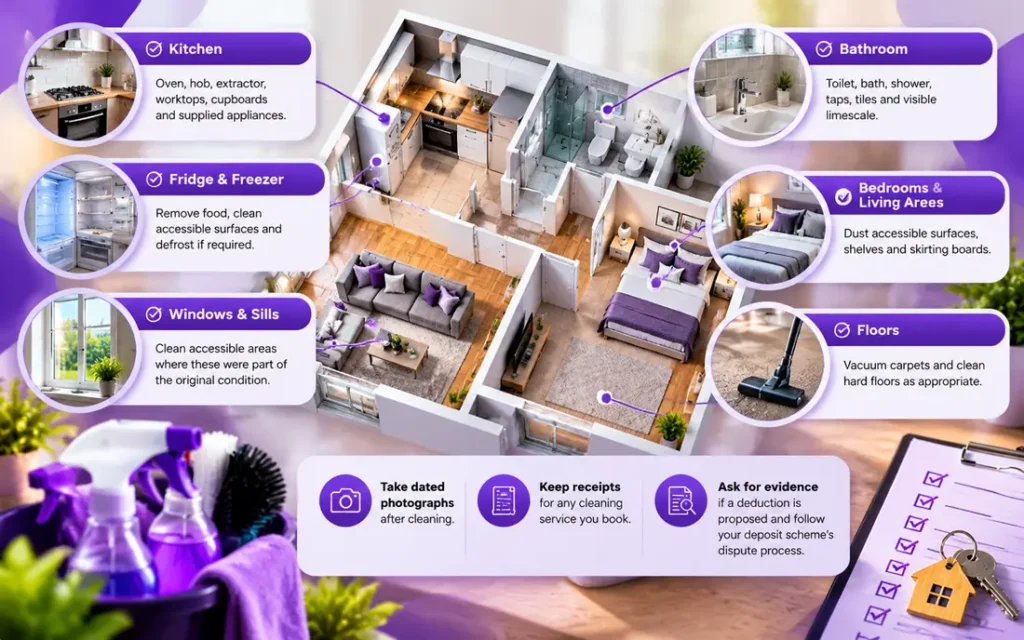
- Kitchen: oven, hob, extractor, worktops, cupboard interiors and appliances supplied with the property.
- Fridge and freezer: remove food, clean accessible surfaces and defrost the freezer if required and safe to do so.
- Bathroom: toilet, bath, shower, taps, tiles and visible limescale.
- Bedrooms and living areas: dust accessible surfaces, shelves and skirting boards.
- Floors: vacuum carpets and clean hard floors as appropriate for the surface.
- Windows and sills: clean accessible areas where these were part of the original condition or agreed scope.
- Final checks: empty cupboards, remove rubbish and return keys as instructed.
Keep dated photographs of the rooms after cleaning and save receipts for any service you book. If a landlord proposes a deposit deduction, ask for an itemised explanation and supporting evidence. If you disagree, follow the dispute process provided by your tenancy deposit protection scheme.
How to Reduce Unexpected Cleaning Costs
- Review the check-in inventory and photographs before deciding what needs attention.
- Clean kitchens and bathrooms regularly during the tenancy so grease and limescale do not build up.
- Make a room-by-room list and decide which tasks you can complete yourself.
- Ask for written quotes early if you need professional help, especially around busy moving periods.
- Check what is included in each quote and confirm any extra charges before booking.
- Leave enough time for cleaning and a final walk-through rather than trying to do everything on the last evening.
- Keep records of repair requests and report leaks or persistent damp and mould to your landlord or agent.
Mould should not automatically be treated as evidence of tenant neglect. Damp and mould can have different causes, including leaks, condensation, ventilation problems or building defects. Photograph affected areas and keep records of any reports you make. For England-specific information, consult the
GOV.UK guidance on damp and mould in rented homes.
When Is Professional End-of-Tenancy Cleaning Worth It?
Hiring a cleaner may be useful if the property is large, you have limited time, several areas need detailed attention or you do not have the equipment required for particular tasks. It may be less necessary for a small, lightly used property that you can clean yourself. The decision should depend on the work required, your available time and the quoted price—not on an assumption that every tenant must hire a professional.
Before booking, ask what rooms and tasks are included, whether oven or carpet cleaning costs extra, how access will be arranged, and what happens if an agreed task is missed. A professional service can help with the cleaning work, but it cannot guarantee that a landlord will agree with every checkout assessment.
Busy Bee Clean provides information about its commercial cleaning services. Contact the company directly to confirm whether it offers the specific residential end-of-tenancy service you need and to request a quote based on your property and required tasks.
End-of-Tenancy Cleaning Checklist
Use this list alongside your check-in inventory and any written checkout instructions.
- Kitchen: clean the oven, hob, extractor, worktops and cupboard surfaces as required.
- Appliances: remove food and clean supplied appliances where included in your responsibilities.
- Bathroom: clean sanitary fittings, shower screens, taps and visible limescale.
- Living areas and bedrooms: dust accessible surfaces, shelves and skirting boards.
- Floors: vacuum carpets and clean hard floors with suitable products.
- Windows: clean accessible glass and sills if needed and safe.
- Throughout the property: remove rubbish and personal belongings.
- Evidence: take dated photographs and save relevant receipts and messages.
- Final handover: check the inventory, follow key-return instructions and keep a copy of communications.
Frequently Asked Questions
Do I have to pay for a professional cleaner when moving out?
In England, a landlord or agent generally cannot require you to pay for a professional clean simply because the tenancy is ending. You may still be responsible for returning the property in the same state of cleanliness as at the start, allowing for fair wear and tear. Check the rules that apply where you live.
Can cleaning costs be deducted from my tenancy deposit?
A landlord may seek a reasonable deduction if the property has been left less clean than it was at check-in, but the claim should be supported by evidence. Compare check-in and check-out records, request an itemised explanation and use your deposit scheme’s dispute process if you disagree.
Does mould automatically mean I am responsible for cleaning costs?
No. Mould can have several causes, including condensation, leaks and building or ventilation problems. Photograph the affected area, report the issue promptly and keep copies of communications. Responsibility depends on the circumstances.
How can I compare end-of-tenancy cleaning quotes?
Ask providers to quote for the same rooms and tasks. Confirm whether appliances, carpets, windows, VAT, travel and any additional work are included. Get the scope and price in writing before booking.
Prepare for Your Move with a Clear Cleaning Plan
Before moving out, compare the property with your check-in inventory, identify the areas that need cleaning and allow enough time for a final inspection. If you are considering professional help, compare itemised quotes and confirm the service covers the tasks you need.